Take a photo of a barcode or cover
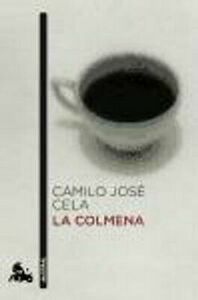
3.5 AVERAGE
3.5 AVERAGE

challenging
medium-paced
Plot or Character Driven:
Character
Strong character development:
Complicated
Diverse cast of characters:
Yes
Content Warnings
Moderate: Death, Sexual content
DNF
الترجمة سيئة جدا جدا والكتاب يحتوي على مليون شخصية بأسماء طويلة ومتشابهة؟؟
وصلت لصفحة ١٦٠ ووقفت خلااااص
الترجمة سيئة جدا جدا والكتاب يحتوي على مليون شخصية بأسماء طويلة ومتشابهة؟؟
وصلت لصفحة ١٦٠ ووقفت خلااااص

Seguir la "historia" de este libro ha sido literalmente imposible. Pongo historia entre comillas porque no tiene reealmente un hilo conductor, tan solo te cuenta ls historia de MÁS DE 300 PERSONAJES... Entre que no tiene un hilo que seguir y la cantidad de personajes que hay... Ha sido imposible! Lo he terminado porque era una lectura obligatoria... Aunque acabemos de empezar el año, va a ir de cabeza a mis peores lecturas del 2021, lo tengo bastante claro.
informative
reflective
medium-paced
Plot or Character Driven:
Character
Strong character development:
Complicated
Loveable characters:
Yes
Diverse cast of characters:
Yes
Flaws of characters a main focus:
Yes

Una muy compleja "trama", pues con más de doscientos personajes, se debe hablar de "tramas". Pero Cela logró así pintar un excelente retrato de la España de los '40, y a la vez la profundidad psicológica de los personajes que pueden ser tan actuales como tú y yo. Todo un clásico.
La Colmena (The Hive in English) could easily be compared to a puzzle. The story, told in six chapters and an epilogue, is not told chrnologically (one of the features that quickly endears me to a book) and the cast of 160-something characters all belong to roughly the same social circle, despite belonging to different social classes. It is now up to a dedicated reader to create the multi-branched cast tree for the uninitiated to jump in.
Despite being born in Spain, my knowledge of Spanish Literature is rather scarce, compared to Literature in English. As part of an assignment, I've sought to correct this partially by reading La Colmena. This novel comes up in discussions about Ulysses, Manhattan Transfer, Berlin Alexanderplatz and Le Sursis, because they all have their corresponding cities as the subject. La Colmena, specifically, centers about the city of Madrid in December of 1942, when dictator Francisco Franco had been in power for three years, and citizens believed it would be better for them if Hitler (allied with Franco) won World War II.
But the novel is hardly about Hitler sympathizers, and instead most of it revolves about how hard it was, for most of the citizens, to have enough to eat and a place to sleep. Women prostitute themselves to those who the Spanish Civil War found to be the victors, either because they fool themselves that it's love, because they have nowhere else to turn to, or because they need money to save the men they actually love. Men and children beg for money, and invariably know someone with tuberculosis (apparently, a whooping 10% of the Spanish population those days was sick with this disease!).
The character at the center of this misery is Martín Marco, who considers himself an artist and has no job to speak of. He begs here and there, eats at his married sister's place, sleeps at another friend's place, sometimes a madame friend will allow him to platonically share a bed with one of her girls for the night . . . Martín, like many then, is at risk because his identification papers mark him as an undesirable, a jobless vagrant. Something like that would soon land you in the newspapers, in the wanted section.
All in all, if fanciful stylings are not your thing (you heathen!), La Colmena also provides the reader with a stark portrait of post-Civil War Spain.
Despite being born in Spain, my knowledge of Spanish Literature is rather scarce, compared to Literature in English. As part of an assignment, I've sought to correct this partially by reading La Colmena. This novel comes up in discussions about Ulysses, Manhattan Transfer, Berlin Alexanderplatz and Le Sursis, because they all have their corresponding cities as the subject. La Colmena, specifically, centers about the city of Madrid in December of 1942, when dictator Francisco Franco had been in power for three years, and citizens believed it would be better for them if Hitler (allied with Franco) won World War II.
But the novel is hardly about Hitler sympathizers, and instead most of it revolves about how hard it was, for most of the citizens, to have enough to eat and a place to sleep. Women prostitute themselves to those who the Spanish Civil War found to be the victors, either because they fool themselves that it's love, because they have nowhere else to turn to, or because they need money to save the men they actually love. Men and children beg for money, and invariably know someone with tuberculosis (apparently, a whooping 10% of the Spanish population those days was sick with this disease!).
The character at the center of this misery is Martín Marco, who considers himself an artist and has no job to speak of. He begs here and there, eats at his married sister's place, sleeps at another friend's place, sometimes a madame friend will allow him to platonically share a bed with one of her girls for the night . . . Martín, like many then, is at risk because his identification papers mark him as an undesirable, a jobless vagrant. Something like that would soon land you in the newspapers, in the wanted section.
All in all, if fanciful stylings are not your thing (you heathen!), La Colmena also provides the reader with a stark portrait of post-Civil War Spain.
I had heard that this book was both confusing and boring, but I loved it. It has a lot of characters (my copy says "almost 300"), and skips from one to the other, making flipping through the book to remind yourself of who a certain character is necessary fairly often, or at least it was for me. I knew it was going to be this way going into it, so it didn't bother me much. Cela is a master of his craft, though, and even though I do not like marking my books, there were many passages that I thought about underlining to go back to them later.
I was also amazed at a lot of the subjects touched on in this book. I am not at all surprised that it took Cela over ten years to get it past the censors in his native Spain (It was originally published in Argentina in 1951.).
I would highly recommend this book, keeping in mind that it is a very complicated book. If you're looking for a simpler read by this author, try
[b:La familia de Pascual Duarte|7556457|La familia de Pascual Duarte|Camilo Jose Cela|http://photo.goodreads.com/books/1266940613s/7556457.jpg|9863081], which is also excellent.
I was also amazed at a lot of the subjects touched on in this book. I am not at all surprised that it took Cela over ten years to get it past the censors in his native Spain (It was originally published in Argentina in 1951.).
I would highly recommend this book, keeping in mind that it is a very complicated book. If you're looking for a simpler read by this author, try
[b:La familia de Pascual Duarte|7556457|La familia de Pascual Duarte|Camilo Jose Cela|http://photo.goodreads.com/books/1266940613s/7556457.jpg|9863081], which is also excellent.

Club de Lectura, Libro #24 Marzo 2017
Este libro tiene varios elementos que no suelen gustarme, pero incluso así me encantó! Otro clásico imprescindible.
P.s. Se recomienda escuchar la versión españoleta en audiolibro e ir anotando los nombres de los personajes.
Este libro tiene varios elementos que no suelen gustarme, pero incluso así me encantó! Otro clásico imprescindible.
P.s. Se recomienda escuchar la versión españoleta en audiolibro e ir anotando los nombres de los personajes.
emotional
funny
reflective
medium-paced
Strong character development:
Yes
Loveable characters:
Yes
Diverse cast of characters:
Yes
Flaws of characters a main focus:
Yes