Take a photo of a barcode or cover

3.79 AVERAGE
3.79 AVERAGE

Quarantine - Greg Egan's imagination ablaze. There's so, so much going on in this hard SF novel. Below are seven hits of futuristic stuff contained in its pages. Incidentally, I was warned by Goodreads friend Manny Rayner that Greg has created a universe with a different quantum mechanics from our own, a universe where men and women can "control the collapse of the wavefunction and select which branch will be left." Anyway, here goes. I hope what I've noted will encourage readers, even liberal arts types like myself, to pick up a copy of Quarantine and blast off to the year 2067 with Greg Egan. What a fabulous adventure.
THE BUBBLE
On November 15, 2034, our solar system was enclosed by a perfect sphere. Along with every other sensible person on the planet, the tale's narrator, a private investigator named Nick Stavrianos, recognizes there is only one plausible explanation: vastly superior aliens constructed a colossal bubble to seal off our solar system from the rest of the universe, effectively putting us in quarantine. The looming question that has remained unanswered for more than three decades is: why?
APOCALYPSE SOON
Nick tells us there have been all sorts of conjectures and theories put forth. “A few intellectually rigorous killjoys argued that any explanation to which humans could relate was probably anthropomorphic nonsense, but nobody invited them onto talk shows.” As perhaps expected, fundamentalists cash in on one more sign portending the end of the world. However, the most extreme group, Children of the Abyss, formed by young men and women born after Nov 15, 2034 and proclaiming “this is the Age of Mayhem” pose the most serious problems. To date, by things like poisoning water supplies and blowing up buildings, they've killed nearly 100,000 people. And, gulp, these radicals are active in forty-seven counties.
LAURA
An anonymous client hires Nick to find Laura Andrews, age thirty-two, who has suffered brain damage since birth. Although Laura can walk clumsily, her ability to understand the world and communicate has always been on the level of a six-month-old baby. Therefore, doctors, staff, security at the Hilgemann Institute, the police, and everyone else are baffled as to how Laura could have disappeared from the institute, where she has been an inpatient since the age of five. She surely couldn't have escaped by herself – Laura could barely turn a doorknob to open a door. Was Laura possibly kidnapped? Nick utilizes sophisticated technology to explore all the possibilities without much success. But when Nick connects the fact that Laura Andrews was conceived on or close to November 15, 2034, the infamous Bubble Day, this astonishing futuristic SF plot torques, twirls, and thickens.
PROGRAMMING MODS
Men and women can purchase various neural modifications (mods) that interact with their thoughts. For example, Nick has a mod that functions as a kind of internal smartphone and another mod that generates a hallucination of his dead wife, Karen, allowing Nick to carry on a conversation and receive advice from her. The mods are tiny; some mods are microscopic. All mods can easily be placed on the side of the head.
PERSONALITY MODS
A darker aspect of neural modification can be seen in those that alter behavior and identity. During his time on the police force, Nick used six standard "Priming mods," which he admits made him less human but a more effective officer. One mod even numbs his grief over his wife's death, reflecting his struggle with genuine human emotions. In another scene, Nick fumes, "Why put up with four more hours of boredom and anxiety? For the masochistic thrill of enduring real human emotions? Fuck that; I had my dose of that this morning, and nearly walked away from the case." These instances raise important questions about humanity and technology.
Then there are mods that are forced on individuals, like the Puppet mod, which makes a person simply repeat what an organization or group wants them to say. Or the Loyalty mod, whereby a person offers unflinching allegiance to whatever the group desires. Now, does all this neural modification sound a tad sinister? You bet it does. In this way, Greg Egan has given us a cautionary tale prompting serious philosophic reflection.
A DETECTIVE'S HELPERS
Prior to entering a top-secret building at night, Nick sends out a computerized scanning system in the form of a mosquito that, in turn, is equipped with a dozen minuscule chameleons. Nick receives the information he needs. “Finally, it checked back with the chameleons, who'd cracked the security system's signal validation protocol, and reported that, after sampling all thirty-five cables, they'd identified twelve by means of which a useful set of contiguous blind spots could be created.” If such surveillance can be conducted on a top-secret facility, just think of the average person's right to privacy. Obliterated!
MIGHTY MULTIVERSE
All of the above is from the first half of the novel and sets the framework for Greg Egan's version of a mind-boggling expansion of quantum mechanics and the eigenstate (please see Comment #1 below). And, yes, at the end, Greg ties all the physics fireworks in with Laura, The Children of the Abyss, and The Bubble. Phenomenal accomplishment. I encourage all readers to accept the challenge and tackle Quarantine.

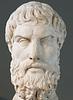
Australian author Greg Egan, born 1961 - Greg takes pride in not having any photos of himself available on the web. This photo is the way I picture the outstanding SF novelist writing at his computer.
challenging
mysterious
medium-paced
Plot or Character Driven:
Plot
Strong character development:
Complicated
Loveable characters:
No
Diverse cast of characters:
Yes
Flaws of characters a main focus:
Complicated

I've finished and I am exhausted and elated and confused and my brain is melted, but also maybe it grew a little? I don't know. What I do know is that I knew nothing about this book before and now I'm utterly obsessed and completely in love with it and the author.
I'm getting so behind on talking more in depth about the books that have absolutely blown my mind, but I will be back to this. Suffice to say this has been one of the most unique, exhilarating, and uniquely exquisite experiences I have ever had with a book.
A book like this is never going to win the bestest, most book ever award (like putting numbers and ribbons on art actually means anything anyway...), but this is without a doubt one of the best books I've ever had the pleasure of reading.
I feel fundamentally changed and envigorated! I already likened the experience of reading this book and attempting to comprehend the concepts it explores as to coming up on class As, but this feels akin to a secular religious experience--I am changed, my perspective has changed, and I have a whole new areas of science, fiction, and science fiction I now know make my brain glow incandescently and melt, and I love that for me.
I am feeling so unbelievably inspired and have already started working on a TTRPG that translates eigenstates and wave forms into mechanics, unifying the dice the protagonist in the book, people in the world of the game, and players at the table...I think. Point is my brain is tingling and I'm inspired
Oh baybee! I have so much more incoherent, hyperfixated, autistic excitement to vent, but for now, spectacular book is spectacular!
I'm getting so behind on talking more in depth about the books that have absolutely blown my mind, but I will be back to this. Suffice to say this has been one of the most unique, exhilarating, and uniquely exquisite experiences I have ever had with a book.
A book like this is never going to win the bestest, most book ever award (like putting numbers and ribbons on art actually means anything anyway...), but this is without a doubt one of the best books I've ever had the pleasure of reading.
I feel fundamentally changed and envigorated! I already likened the experience of reading this book and attempting to comprehend the concepts it explores as to coming up on class As, but this feels akin to a secular religious experience--I am changed, my perspective has changed, and I have a whole new areas of science, fiction, and science fiction I now know make my brain glow incandescently and melt, and I love that for me.
I am feeling so unbelievably inspired and have already started working on a TTRPG that translates eigenstates and wave forms into mechanics, unifying the dice the protagonist in the book, people in the world of the game, and players at the table...I think. Point is my brain is tingling and I'm inspired
Oh baybee! I have so much more incoherent, hyperfixated, autistic excitement to vent, but for now, spectacular book is spectacular!
This begins as a private investigator novel and then eventually shifts into something else. In 2064 neurological modification is a commonplace commodity. However you want to be or feel can be determined by commercially available mods. They can also augment the user by altering biochemistry and providing digital interfaces.
The theoretical ideas expressed by the novel don't come to the fore until roughly halfway through, which seems an odd choice to me, but ironically I may have enjoyed the first half more. The various theories of quantum mechanics are the primary ideas explored. The core questions are what are the practical applications of self-decoherence and how much does free will really matter anyway?
If you thought that the name of the book would be its focus, you'd be wrong. The fact that a volume twice pluto's orbit has been enclosed, not just the Earth, is central to everything that happens in the book, but its significance isn't explained until the end and mostly serves as a plot device.
There's a lot that has been to be taken on faith, as it were, for both the reader and the characters, which Egan realizes and tries to defuse by having the characters repeatedly state that what they're doing isn't quantum mysticism, it's science. I'm very skeptical when is used for why everything happens, because it's so very convenient and often unsatisfactory like deus ex machina are.
As seems typical so far of Egan, the ending and what leads up to it are where Egan decides that the theory must be taken to its extreme. I wasn't pleased because it reminded me of by LeGuin, though in this case everyone can do so. It's messy, literally and figuratively.
Rating: 3.5/5
The theoretical ideas expressed by the novel don't come to the fore until roughly halfway through, which seems an odd choice to me, but ironically I may have enjoyed the first half more. The various theories of quantum mechanics are the primary ideas explored. The core questions are what are the practical applications of self-decoherence and how much does free will really matter anyway?
If you thought that the name of the book would be its focus, you'd be wrong. The fact that a volume twice pluto's orbit has been enclosed, not just the Earth, is central to everything that happens in the book, but its significance isn't explained until the end and mostly serves as a plot device.
There's a lot that has been to be taken on faith, as it were, for both the reader and the characters, which Egan realizes and tries to defuse by having the characters repeatedly state that what they're doing isn't quantum mysticism, it's science. I'm very skeptical when
Spoiler
retrocausalityAs seems typical so far of Egan, the ending and what leads up to it are where Egan decides that the theory must be taken to its extreme. I wasn't pleased because it reminded me of
Spoiler
Lathe of HeavenRating: 3.5/5
I actually picked up this copy of Egan's 1992 hard science fiction novel before the lockdown, but decided it was the time to read it now. The quarantine in the title was imposed on the whole solar system in the 2030s, a bubble that blocked off the stars from the night sky, apparently imposed by an alien intelligence, but still by the 2060s, when the action of the novel takes place, nobody knows why. Australian writer Egan has no shortage of big ideas and in this novel he's playing around with the Copenhagen interpretation of quantum mechanics. Highly entertaining and thought provoking. This is the second of his novels I've read, after the excellent Permutation City.
inspiring
mysterious
reflective
medium-paced
Plot or Character Driven:
Character
Strong character development:
Yes
Loveable characters:
Yes
Diverse cast of characters:
No
Flaws of characters a main focus:
Yes
informative
mysterious
fast-paced
Plot or Character Driven:
A mix
Strong character development:
Yes
Diverse cast of characters:
Yes
Flaws of characters a main focus:
Yes
adventurous
mysterious
medium-paced
Plot or Character Driven:
A mix
Strong character development:
Yes
Loveable characters:
No
Diverse cast of characters:
No
Flaws of characters a main focus:
Yes
This was recommended to me by the late, great, House of Speculative Fiction here in Ottawa.
I didn't much care for it. The "smearing" was just a little too out there for me. But I won't hold it against the good folk from House of SF, as they've turned me on to a few gems I wouldn't otherwise have found out about.
I didn't much care for it. The "smearing" was just a little too out there for me. But I won't hold it against the good folk from House of SF, as they've turned me on to a few gems I wouldn't otherwise have found out about.
challenging
dark
informative
mysterious
slow-paced
Plot or Character Driven:
Plot
Strong character development:
No
Loveable characters:
Complicated
Diverse cast of characters:
No
Flaws of characters a main focus:
No
What would happen if quantum phenomena became apparent at the macroscopic level? What would it take for quantum tunneling to manifest itself in our every day world? How can one apply - literally -the quantum world of probabilities in our everyday experience?
The author takes the implications of the observer effect to the extreme making for an interesting read that is part science, part philosophical ruminations on the nature of reality and part mystery novel.
It's a very well written book, but I feel that the complexity of the ideas presented can easily make one who has not had any exposure to the core concepts feel lost.
The author takes the implications of the observer effect to the extreme making for an interesting read that is part science, part philosophical ruminations on the nature of reality and part mystery novel.
It's a very well written book, but I feel that the complexity of the ideas presented can easily make one who has not had any exposure to the core concepts feel lost.