Take a photo of a barcode or cover
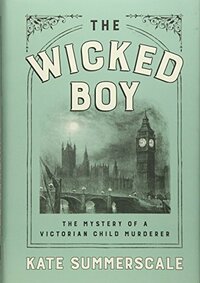
3.4 AVERAGE
3.4 AVERAGE

dark
informative
mysterious
reflective
Read for the True Crime category of Nonfiction Reader Challenge, a genre that I usually don't gravitate to. I appreciated that Summerscale stayed with the facts for the most part, though she did slip in a certain amount of speculation. It's hard not to, as the historical record does not have any explanation for why this murder was actually committed. It is most intriguing that the murderer ended up giving refuge to another boy who was suffering domestic abuse, and it's plausible that he did so in empathy out of his own experience. But we just can't know what really happened, and that is a bit frustrating.
Summerscale rounds out the story with information about the time and place that is often quite interesting, but sometimes goes a bit far off topic - seems like stretching to fill pages.
Summerscale rounds out the story with information about the time and place that is often quite interesting, but sometimes goes a bit far off topic - seems like stretching to fill pages.
I was enjoying the book, as much as a body can enjoy a nonfiction book about a 13-year-old murdering his mother. The clear and no-nonsense style of writing was easy to write, even if the flood of names, dates, and peripheral information got a little dizzying at times. The final section dragged on a bit, as involved with WWI as it was instead of Robert Coombes, the Coombes family, or the general fallout of the "Plaistow Tragedy." Understandable, since, as Summerscale said, she couldn't find much about the aftermath. Still, it was a lot of WWI information I wasn't expecting or especially jazzed to be reading about.
The epilogue hit hardest. I can remember the exact sentence where my stomach twisted in dread, and I remember the paragraph where the dread faded into relief and something almost joyful. While the rest of the book is clearly about the murder, the society, the bare facts of the people involved, the epilogue is about theme. The redemptive potential of a tarnished, fractured human soul, maybe. I almost cried a little bit at the last few sentences, because I'm not a dignified person with dignified emotions.
The epilogue hit hardest. I can remember the exact sentence where my stomach twisted in dread, and I remember the paragraph where the dread faded into relief and something almost joyful. While the rest of the book is clearly about the murder, the society, the bare facts of the people involved, the epilogue is about theme. The redemptive potential of a tarnished, fractured human soul, maybe. I almost cried a little bit at the last few sentences, because I'm not a dignified person with dignified emotions.
I enjoyed her other book on my list more. This was interesting, but I never felt that I got to know the Wicked Boy himself. Maybe someday, when records can be released (2042 or some ridiculous year!) we will get to glimpse his motivations a little more. Interesting, though.
Boys will be boys...
For ten days in the summer of July 1895, two boys spent their time roaming round coffee shops and attending cricket matches, and telling anyone who asked that their mother had gone to visit relatives in Liverpool. They slept downstairs in the back parlour of their house, with a family friend who had come at their request to look after them. Meantime, an unpleasant smell was beginning to seep from the house, becoming so bad eventually that the neighbours complained to the boys' aunt. When she forced her way into the house, she discovered the badly decomposed body of the boys' mother, and immediately young Robert Coombes admitted to having stabbed her to death.
This is a chilling but fascinating true crime story from the end of the Victorian era. Robert Coombes was thirteen at the time of the murder and his brother Nattie was twelve. The idea of the matricide itself horrified contemporary society enough, but it was the cool behaviour of the boys over the following ten days that made the crime seem even more shocking. Evidence showed that the murder was planned – Robert had bought the knife specially a few days earlier, and he later claimed that he and Nattie had arranged a signal for when the deed should be done.
The first part of the book concentrates on the crime and the trial procedures and Summerscale covers these with her usual excellent attention to detail. Because they felt that their case against Robert would be stronger if his brother gave evidence, the prosecution were keen to have the charges against Nattie dropped, since at that time defendants were not allowed to tell their story in court. In the early proceedings, Robert had no lawyer or other representation and was expected to cross-examine witnesses by himself. The boys' father was a steward on board a transatlantic cattle vessel, and wasn't even aware of the murder till after the first hearings had taken place.
Although this all sounds horrific to our modern ideas of justice, especially for children, there seems little doubt that Robert was indeed guilty, and some of the court officers did their best to make the process as easy for him as they could within the system. The boys were held in an adult jail during the trial process, but had individual cells – a luxury they would be unlikely to get today. The boys' extended family did show up for the hearings, so Nattie at least had some adult support.
The defence quickly decided to try for an insanity ruling, which meant that they actually preferred for there not to be a rational motive, while the prosecution felt Robert's guilt was so obvious they didn't need one. The result of this is that no-one ever really asked why Robert did it, and so the motivation remains unclear. Summerscale suggests on the basis of some fairly circumstantial evidence that the mother may have been cruel to the boys in her husband's absence – there is a suggestion that she too suffered from “excitability” and extreme mood swings, and may have beaten the boys badly, but this is largely speculation.
In this first section, Summerscale also widens her discussion out to look at the society and living conditions of the time. Robert's family was working class, but not grindingly poor – his father had a decent income, and the boys got a good education. However, at that time, there was much debate as to whether educating the poor was a good thing, especially since the ability to read allowed boys access to the “penny dreadfuls” of the time, which many considered to have a bad influence on impressionable young minds. Robert had a collection of such pamphlets, and the press made much of this. The crime took place in Plaistow in Essex, an industrial area within the range of the heavily polluted atmosphere of London. There was also much debate at that time about the general poor health of the urban poor, while the acceptance of the theory of evolution brought with it a belief in the possibility of its opposite, degeneration. It all reminded me of the “bad boy” culture that Andrew Levy discussed so thoroughly in his book about Twain's young hero, [b:Huck Finn's America|16130539|Huck Finn's America Mark Twain and the Era That Shaped His Masterpiece|Andrew Levy|https://d.gr-assets.com/books/1420938109s/16130539.jpg|21955476].
The second half of the book tells the story of what happened to Robert after his conviction. Summerscale is asking, and answering, the question of whether someone who has done such a dreadful thing can go on to lead a normal, even worthwhile life. Robert spent several years in Broadmoor, the hospital for the criminally insane, where again because of his youth he was in fact treated more kindly than we might expect. This whole section is fascinating in what it tells us about the treatment of those judged criminally insane. In fact, from time to time there were complaints that the treatment was too kind – that people were faking insanity to avoid the much harder regime in normal prisons.
This is not the end of Robert's story, though. Following his eventual release from Broadmoor, Summerscale follows his trail through the rest of his life, uncovering some interesting and unexpected details about how he turned out. So often true crime stories from the Victorian era end with a conviction and capital punishment. This one, being somewhat later and also because it concerned a child, is intriguing because we are able to see the aftermath. At the point of conviction Robert would undoubtedly have been seen as some kind of monster, but Summerscale lets us see whether the rest of his life confirmed that or allowed him to find some kind of redemption. Immaculately researched, well written and presented, this is easily the equal of Summerscale's [b:The Suspicions of Mr. Whicher|1747896|The Suspicions of Mr. Whicher A Shocking Murder and the Undoing of a Great Victorian Detective|Kate Summerscale|https://d.gr-assets.com/books/1312021413s/1747896.jpg|3254095], and personally, having worked with boys of that age with troubled and often criminal histories, I found this one even more interesting. Highly recommended.
NB This book was provided for review by the publisher, Penguin Group.
www.fictionfanblog.wordpress.com
For ten days in the summer of July 1895, two boys spent their time roaming round coffee shops and attending cricket matches, and telling anyone who asked that their mother had gone to visit relatives in Liverpool. They slept downstairs in the back parlour of their house, with a family friend who had come at their request to look after them. Meantime, an unpleasant smell was beginning to seep from the house, becoming so bad eventually that the neighbours complained to the boys' aunt. When she forced her way into the house, she discovered the badly decomposed body of the boys' mother, and immediately young Robert Coombes admitted to having stabbed her to death.
This is a chilling but fascinating true crime story from the end of the Victorian era. Robert Coombes was thirteen at the time of the murder and his brother Nattie was twelve. The idea of the matricide itself horrified contemporary society enough, but it was the cool behaviour of the boys over the following ten days that made the crime seem even more shocking. Evidence showed that the murder was planned – Robert had bought the knife specially a few days earlier, and he later claimed that he and Nattie had arranged a signal for when the deed should be done.
The first part of the book concentrates on the crime and the trial procedures and Summerscale covers these with her usual excellent attention to detail. Because they felt that their case against Robert would be stronger if his brother gave evidence, the prosecution were keen to have the charges against Nattie dropped, since at that time defendants were not allowed to tell their story in court. In the early proceedings, Robert had no lawyer or other representation and was expected to cross-examine witnesses by himself. The boys' father was a steward on board a transatlantic cattle vessel, and wasn't even aware of the murder till after the first hearings had taken place.
Although this all sounds horrific to our modern ideas of justice, especially for children, there seems little doubt that Robert was indeed guilty, and some of the court officers did their best to make the process as easy for him as they could within the system. The boys were held in an adult jail during the trial process, but had individual cells – a luxury they would be unlikely to get today. The boys' extended family did show up for the hearings, so Nattie at least had some adult support.
The defence quickly decided to try for an insanity ruling, which meant that they actually preferred for there not to be a rational motive, while the prosecution felt Robert's guilt was so obvious they didn't need one. The result of this is that no-one ever really asked why Robert did it, and so the motivation remains unclear. Summerscale suggests on the basis of some fairly circumstantial evidence that the mother may have been cruel to the boys in her husband's absence – there is a suggestion that she too suffered from “excitability” and extreme mood swings, and may have beaten the boys badly, but this is largely speculation.
In this first section, Summerscale also widens her discussion out to look at the society and living conditions of the time. Robert's family was working class, but not grindingly poor – his father had a decent income, and the boys got a good education. However, at that time, there was much debate as to whether educating the poor was a good thing, especially since the ability to read allowed boys access to the “penny dreadfuls” of the time, which many considered to have a bad influence on impressionable young minds. Robert had a collection of such pamphlets, and the press made much of this. The crime took place in Plaistow in Essex, an industrial area within the range of the heavily polluted atmosphere of London. There was also much debate at that time about the general poor health of the urban poor, while the acceptance of the theory of evolution brought with it a belief in the possibility of its opposite, degeneration. It all reminded me of the “bad boy” culture that Andrew Levy discussed so thoroughly in his book about Twain's young hero, [b:Huck Finn's America|16130539|Huck Finn's America Mark Twain and the Era That Shaped His Masterpiece|Andrew Levy|https://d.gr-assets.com/books/1420938109s/16130539.jpg|21955476].
The second half of the book tells the story of what happened to Robert after his conviction. Summerscale is asking, and answering, the question of whether someone who has done such a dreadful thing can go on to lead a normal, even worthwhile life. Robert spent several years in Broadmoor, the hospital for the criminally insane, where again because of his youth he was in fact treated more kindly than we might expect. This whole section is fascinating in what it tells us about the treatment of those judged criminally insane. In fact, from time to time there were complaints that the treatment was too kind – that people were faking insanity to avoid the much harder regime in normal prisons.
This is not the end of Robert's story, though. Following his eventual release from Broadmoor, Summerscale follows his trail through the rest of his life, uncovering some interesting and unexpected details about how he turned out. So often true crime stories from the Victorian era end with a conviction and capital punishment. This one, being somewhat later and also because it concerned a child, is intriguing because we are able to see the aftermath. At the point of conviction Robert would undoubtedly have been seen as some kind of monster, but Summerscale lets us see whether the rest of his life confirmed that or allowed him to find some kind of redemption. Immaculately researched, well written and presented, this is easily the equal of Summerscale's [b:The Suspicions of Mr. Whicher|1747896|The Suspicions of Mr. Whicher A Shocking Murder and the Undoing of a Great Victorian Detective|Kate Summerscale|https://d.gr-assets.com/books/1312021413s/1747896.jpg|3254095], and personally, having worked with boys of that age with troubled and often criminal histories, I found this one even more interesting. Highly recommended.
NB This book was provided for review by the publisher, Penguin Group.
www.fictionfanblog.wordpress.com
This was pretty interesting, but I confess I skimmed over some parts where the author wandered off in pretty dull unrelated detail.
dark
informative
medium-paced
Not as engaging as The Suspicions of Mr Wicher but Summerscale is a gifted researcher and writer whatever her subject.
This isn't a salacious re-telling of the story of a child murderer (a la the Daily Mail). It's the story of how contemporary psychology viewed children and their development, of Broadmoor and its treatments, and about the Great War and redemption. The last third of this book is rather poignant and somehow beautiful.
Kate Summerscale is so good at these "true crime" stories. Her USP is that she doesn't just tell the story of a crime, or play the "sensational" card; her books become social history as she talks about the environment in which the crimes took place. The Coombes are a respectable working class family, relatively well off, with their two sons well dressed and educated. It's a shock then when Robert murders his mother in her bed, leaves the body there for ten days, and confesses coolly to the murder when his aunt finally discovers the maggot-ridden corpse.
The book covers the trial and immediate aftermath of course, but Summerscale's ace research skills enable her to trace Robert and Nattie to the end of their lives, far removed from the street in Plaistow where they grew up. But perhaps inevitably, given the obscurity of their lives before and after the dramatic event, she can't give any real insight into the motivation for the act (Robert's lawyers, intent on proving him insane, had no interest in providing a rational motive, so it was barely discussed in court). This leaves a strange hole at the centre of the narrative. You can't help sensing a background of child abuse, alongside the decidedly creepy fact that with his father absent at sea, 13-year old Robert was sleeping with his mother despite there being more than enough beds in the house.
One of the things I found most interesting was the alarm caused among well-off Victorians by universal elementary education, made compulsory in 1870. The ability to read thus conferred on working class children made them liable to get all sorts of dangerous ideas -- in particular, "penny dreadful" stories were demonised in the way video games are today.
The Pall Mall Gazette even expressed regret that the two degenerate boys were not hanged: "It would be well if we could choke such moral abortions at birth, as we now choke physical ones. But since we cannot diagnose them at sight, it is surely wiser, cheaper, and kinder to dispose of them at once, when they do declare themselves, with no more excitement or doubt than a housemaid gives to the crushing of a beetle."
Given these attitudes, a second surprise was how progressive Broadmoor asylum was -- to the point that claiming insanity was sometimes seen as a soft option, a way of getting good treatment and early release (asylum inmates were detained "at Her Majesty's Pleasure", which normally meant life, but good behaviour could see them released). Robert was kindly treated and spent his years there playing in brass and string bands, engaging in competitive chess and cricket, and learning tailoring skills. It seems unlikely that he was "insane", but this regime did him more good than sending him to an adult jail would have done. It's not quite the image of Victorian imprisonment that you would get from reading Dickens ...
The book covers the trial and immediate aftermath of course, but Summerscale's ace research skills enable her to trace Robert and Nattie to the end of their lives, far removed from the street in Plaistow where they grew up. But perhaps inevitably, given the obscurity of their lives before and after the dramatic event, she can't give any real insight into the motivation for the act (Robert's lawyers, intent on proving him insane, had no interest in providing a rational motive, so it was barely discussed in court). This leaves a strange hole at the centre of the narrative. You can't help sensing a background of child abuse, alongside the decidedly creepy fact that with his father absent at sea, 13-year old Robert was sleeping with his mother despite there being more than enough beds in the house.
One of the things I found most interesting was the alarm caused among well-off Victorians by universal elementary education, made compulsory in 1870. The ability to read thus conferred on working class children made them liable to get all sorts of dangerous ideas -- in particular, "penny dreadful" stories were demonised in the way video games are today.
The Saint James Gazette observed that Robert's schooling had not made him more civilised but more savage, accentuating rather than arresting the degenerative process: 'all that elementary education did for Master Coombes was to provide him with weapons, as it were, to sharpen the claws of the little tiger'. ... Robert Coombes was one of a new breed of urban lunatic, said the Chronicle, a tribe of vicious, quick-witted degenerates who had replaced the 'grinning and harmless imbeciles that sunned themselves in the towns and villages of an older England'.
The Pall Mall Gazette even expressed regret that the two degenerate boys were not hanged: "It would be well if we could choke such moral abortions at birth, as we now choke physical ones. But since we cannot diagnose them at sight, it is surely wiser, cheaper, and kinder to dispose of them at once, when they do declare themselves, with no more excitement or doubt than a housemaid gives to the crushing of a beetle."
Given these attitudes, a second surprise was how progressive Broadmoor asylum was -- to the point that claiming insanity was sometimes seen as a soft option, a way of getting good treatment and early release (asylum inmates were detained "at Her Majesty's Pleasure", which normally meant life, but good behaviour could see them released). Robert was kindly treated and spent his years there playing in brass and string bands, engaging in competitive chess and cricket, and learning tailoring skills. It seems unlikely that he was "insane", but this regime did him more good than sending him to an adult jail would have done. It's not quite the image of Victorian imprisonment that you would get from reading Dickens ...

Really good read. Interesting slice of Victorian life and the still burgeoning sciences of psychology and psychiatry.