Take a photo of a barcode or cover
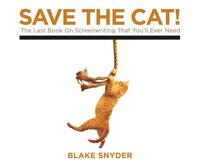
3.84 AVERAGE
3.84 AVERAGE

This was a good book! Actually it feels more somewhere between three and four stars. I really liked some of the actual exercises they suggested, and some other tricks that you can do that aren't vague or arbitrary. It inspired me to write, and not just movies, but to approach any story a little differently.
At the same time, this book is ten years old now, and it kind of shows. A lot of the advice is timeless and important, but other things involving technology or current events show their age. It even mentions Blockbuster. It doesn't mention current or even recent social media, or services like Netflix. However none of that really affects the core writing information. There were also some things I just flat-out disagreed about, like a mention of character archetypes and a couple other things I can't remember right now because it's almost 1am.
Overall I'm glad I read it, and I really want to try out and adapt some of the exercises to suit my own purposes. I would still recommend it to aspiring writers. It's also a pretty quick read.
At the same time, this book is ten years old now, and it kind of shows. A lot of the advice is timeless and important, but other things involving technology or current events show their age. It even mentions Blockbuster. It doesn't mention current or even recent social media, or services like Netflix. However none of that really affects the core writing information. There were also some things I just flat-out disagreed about, like a mention of character archetypes and a couple other things I can't remember right now because it's almost 1am.
Overall I'm glad I read it, and I really want to try out and adapt some of the exercises to suit my own purposes. I would still recommend it to aspiring writers. It's also a pretty quick read.
informative
fast-paced
I can see the merit in this book and understand why it is still hailed as a must-read for writers. The advice is a bit dated (understandably so, since it was first published in 2005), and at times Snyder came off as quite presumptuous. All in all though, it provided some helpful revision on the craft of writing, particularly the first half detailing plotting your story and story structure. I would recommend this book to storytellers of all kinds—albeit with a grain of salt.

informative
inspiring
reflective
medium-paced
Check out my semi-book review on https://littleseabear.com
Review originally posted here: http://emmamaree.com/reviews/save-the-cat/
A clear, well-written guide to presenting your story to other people. It’s aimed at screenwriters, but it’s also a well-known tool for fiction and non-fiction writers. A lot of the information (such as know your genre, have a one line pitch) will be familiar to anyone who’s been following writing blogs or lurking in the query trenches, but if not then it’s a great place to start.
It covers lots of essential information, including genres, character archetypes, and my personal favourite the ‘beat sheet’, which breaks down most plots into a simple structure and can be very helpful for working out pacing problems and structural issues.
Blake can come across as irritating with his every-other-page self-promotion. I loved when he pulled out popular movies for examples of genres and styles, but I got sick of him reference his own ever-so-successful films and TV ideas. I’d never heard of any of them. This would have been fine in a smaller dose, but there was just too much of it.
I think I’ll dip into this book occasionally when I need a refresher on cliches, tropes, and plot structures – but it’s a difficult book to read from start to finish without Snyder’s comments getting on your nerves.
A clear, well-written guide to presenting your story to other people. It’s aimed at screenwriters, but it’s also a well-known tool for fiction and non-fiction writers. A lot of the information (such as know your genre, have a one line pitch) will be familiar to anyone who’s been following writing blogs or lurking in the query trenches, but if not then it’s a great place to start.
It covers lots of essential information, including genres, character archetypes, and my personal favourite the ‘beat sheet’, which breaks down most plots into a simple structure and can be very helpful for working out pacing problems and structural issues.
Blake can come across as irritating with his every-other-page self-promotion. I loved when he pulled out popular movies for examples of genres and styles, but I got sick of him reference his own ever-so-successful films and TV ideas. I’d never heard of any of them. This would have been fine in a smaller dose, but there was just too much of it.
I think I’ll dip into this book occasionally when I need a refresher on cliches, tropes, and plot structures – but it’s a difficult book to read from start to finish without Snyder’s comments getting on your nerves.
funny
informative
inspiring
reflective
fast-paced
Seems to only prioritize old box office hits. Cares more about making money than improving the world through storytelling. That doesn’t make it bad inherently. It’s useful, but not inspiring. Lessons on structure are educational, still.
This infamous book is both a formula for Hollywood shlock and indispensable treatise on (one kind of) storytelling. The truth is that it's less of a formula than a scaffold: it provides an extraordinarily useful structure (the 'beat sheet') for inventing your screenplay. It certainly does not write a screenplay for you, you still have to provide ideas, inventions, ingenuity.
Regardless, as a total screenwriting noob, this book is utterly invaluable, and I simply would never have ended up with a screenplay without. If you're learning, or if you're unhappy with what you've made so far, I would very honestly recommend reading this, *despite* the generally insufferable voice of the author, repeatedly congratulating himself on how many screenplays he's sold.
I mean, the guy probably wouldn't know art if it came up to him holding a giant sign that said "ART" on it, but he's very explicit about the goal of the book: to sell screenplays to Hollywood. What's remarkable, perhaps, is that you could *still make art* using this framework. Using the formula doesn't *prevent* you from making something heartfelt and beautiful, but it does make it more likely that you'll at least finish it. And there's nothing stopping you from deviating, trying out something different, and potentially failing as a result. He encourages that, too.
Regardless, as a total screenwriting noob, this book is utterly invaluable, and I simply would never have ended up with a screenplay without. If you're learning, or if you're unhappy with what you've made so far, I would very honestly recommend reading this, *despite* the generally insufferable voice of the author, repeatedly congratulating himself on how many screenplays he's sold.
I mean, the guy probably wouldn't know art if it came up to him holding a giant sign that said "ART" on it, but he's very explicit about the goal of the book: to sell screenplays to Hollywood. What's remarkable, perhaps, is that you could *still make art* using this framework. Using the formula doesn't *prevent* you from making something heartfelt and beautiful, but it does make it more likely that you'll at least finish it. And there's nothing stopping you from deviating, trying out something different, and potentially failing as a result. He encourages that, too.

informative
fast-paced
Informativo, bastante útil para alguien que quiera adentrarse en la industria del cine en un aspecto más comercial. Es cierto que hay algunas cosas que ya quedaron viejas (se escribió a principios de los 2000), pero también hay consejos que son eternos y bastante útiles; los tendré en consideración.