Take a photo of a barcode or cover
242 reviews by:
itsawrapxx

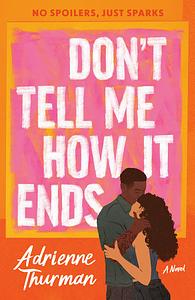
Throughout the novel, love is compared to a parachute—you take the leap hoping that faith will carry you safely to the ground. But that metaphor made me wonder: what happens when you discover there are holes in the parachute before you even jump?
This story picks up after the shocking events of the first book. Tahli learned her husband, Vin, had been unfaithful when police arrived at her door late one night with a child, revealing that Vin was the boy's father. Now, in this installment, Tahli has left Vin, and the story follows both of them as they navigate the aftermath of betrayal, the consequences of long-held secrets, and the difficult question of whether trust can ever truly be rebuilt. Set in New Jersey, the novel stays closely focused on the emotional unraveling of their marriage rather than relying on dramatic plot twists.
One thing I appreciated is that the story refuses to paint either character as completely innocent or completely guilty. At first, it's easy to see Vin as the obvious villain because his infidelity sets everything in motion. But as the novel progresses, we learn that Tahli has been carrying secrets of her own. While I don't think her dishonesty comes from the same place as Vin's, it still shapes the course of their relationship in meaningful ways.
To me, the biggest difference between them is why they lie. Tahli often hides the truth to protect her image and preserve the life she's built. Vin, on the other hand, seems driven by a desire to control outcomes and avoid the consequences of his choices. Rather than facing uncomfortable truths head-on, he continuously delays accountability, hoping everything will somehow work itself out.
Ironically, that's what made their relationship so fascinating. They're more alike than either of them wants to admit. Both use dishonesty as a shield, just for different reasons. By the end, I found myself wondering if they're actually a perfect match—not because they're soulmates, but because they mirror one another in ways neither of them fully understands.
That said, I have to admit I didn't particularly like either Tahli or Vin. They're frustrating characters, and more than once I found myself questioning their decisions. But I don't necessarily think that's a flaw. Not every protagonist has to be likable to be compelling. In fact, their imperfections made me think more deeply about the ways people justify their actions and convince themselves they're protecting the people they love when they're really protecting themselves.
The novel also raises interesting questions about forgiveness, accountability, and whether love can exist without complete honesty. Is a relationship built on partial truths ever sustainable? Can trust be rebuilt when both people have contributed to breaking it? Those are the questions that stayed with me long after I finished reading.
I'm jumping into book 3 so we will see how these questions continue to be explored.
I'm jumping into book 3 so we will see how these questions continue to be explored.
challenging
dark
emotional
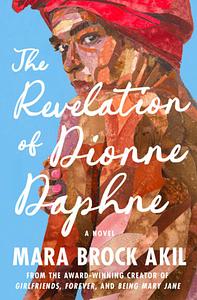
Some stories ask whether healing is possible. This one asks what happens when you're finally forced to confront the truths you've spent your life trying to survive.
Over the course of the novel, Dionne learns that honoring her own truth is the only way forward, and that in the end, the person most capable of protecting her is herself. It's a painful, emotionally raw journey that explores trauma, love, friendship, and reclaiming your voice.
One of the book's greatest strengths is how much emotional transformation happens within such a short period of time. Fourteen days doesn't sound like much, but the story never feels rushed. Instead, every revelation pushes Dionne further toward understanding herself. I especially loved the way the external journey mirrored her internal healing.
Even after experiencing profound betrayals from the people who should have protected her, Dionne slowly discovers new forms of safety through the relationships she builds. I particularly loved watching her connection with Dominic grow. The intimacy and gentleness he offers never feel like a cure for her trauma but rather a reminder that care and compassion still exist. I also appreciated the evolution of Dionne's friendship with Farrah. Seeing Dionne finally open herself up and be fully received strengthened one of my favorite relationships in the novel.
As someone who has been a fan of Mara Brock Akil's television work, one thing I consistently admire about her storytelling is that her characters never have everything figured out. They make mistakes. They disappoint each other. They sometimes fail to show up in the ways they should. Yet they're written with so much humanity that I can't help but see pieces of myself in them. Their imperfections invite reflection instead of judgment.
One of the book's greatest strengths is how much emotional transformation happens within such a short period of time. Fourteen days doesn't sound like much, but the story never feels rushed. Instead, every revelation pushes Dionne further toward understanding herself. I especially loved the way the external journey mirrored her internal healing.
Even after experiencing profound betrayals from the people who should have protected her, Dionne slowly discovers new forms of safety through the relationships she builds. I particularly loved watching her connection with Dominic grow. The intimacy and gentleness he offers never feel like a cure for her trauma but rather a reminder that care and compassion still exist. I also appreciated the evolution of Dionne's friendship with Farrah. Seeing Dionne finally open herself up and be fully received strengthened one of my favorite relationships in the novel.
As someone who has been a fan of Mara Brock Akil's television work, one thing I consistently admire about her storytelling is that her characters never have everything figured out. They make mistakes. They disappoint each other. They sometimes fail to show up in the ways they should. Yet they're written with so much humanity that I can't help but see pieces of myself in them. Their imperfections invite reflection instead of judgment.
More than anything, this novel reminded me that healing isn't about becoming perfect—it's about learning to tell yourself the truth and choosing yourself, even after unimaginable pain. Through Dionne's story, I found myself reflecting on my own relationships, my own conflicts, and how I want to show up better for both myself and the people I love.
Content Warnings
Graphic: Child abuse, Sexual assault

medium-paced
There were elements of many things I enjoy in a romance, but it all come together in a way that was unmemorable. I didn't find Kaia annoying, her directionlessness made sense to me as a recent grad. I wish we got more depth in the things she was navigating rather than it all accumulating to just avoidance.
I’m unclear on Ro’s age because his behavior reads older, and I question what exactly draws him to Kaia. The reasons why I question Ro's attraction to Kaia, is the first things he throws in her face by the third act split too.
I would have liked the friendship between Liv and Kaia to be explored more. Their shifting friendship feels like a missed opportunity to add emotional depth and stakes to a story that, at times, feels like it’s dragging.

This was such a fun read! This was giving Accidental Diva/The Perfect Find Tia Williams, especially in how effortlessly it blends humor with culturally relevant moments. Sasha and Wes have this great chemistry, the banter, the tension, the mutual desire—it all jumps off the page in a way that makes you feel it. I ate this book up!
What I loved most is how the story stretches reality just enough to keep things exciting and playful, without ever losing me as a reader. It strikes that perfect balance between fun escapism and emotional payoff.
If you’re in the mood for something light, entertaining, and full of heart—with two main characters who actually make you feel something—this is definitely one to pick up.