You need to sign in or sign up before continuing.
Take a photo of a barcode or cover
mars2k's Reviews (234)
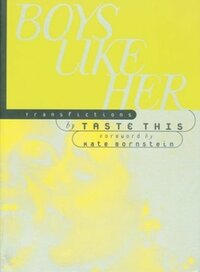
Boys Like Her: Transfictions
Ivan Coyote, Anna Camilleri, Taste This, Lyndell Montgomery, Kate Bornstein, Zoë Eakle
challenging
dark
emotional
funny
inspiring
reflective
fast-paced
Live – youthful, theatrical, charged.
You can tell it was originally intended to be performed rather than read. Would have been nice to experience that.
I think my favourite piece – the one that stuck out to me – was a poem called “Sly Boots” by Anna Camilleri. I’d like to read more of her work.
emotional
sad
tense
fast-paced
Mid disaster
adventurous
dark
emotional
funny
reflective
sad
tense
fast-paced
Read for book club June 2025
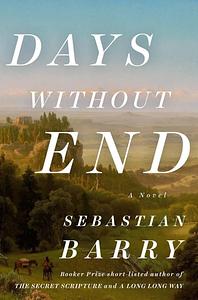
I liked this book a lot more than I thought I would. I don’t usually go for historical novels, and the American Civil War isn’t an interest of mine. I was drawn in by the writing style; the evocative imagery, the efficient character studies, and the authentic voice (though I know some will be tripped up by the grammar).
Days Without End raised all sorts of questions about queerness in a racist and sexist world. Masculinity is presented as a vehicle of violence and conquest, contrasted with feminine mystery.Escapist interludes slowly give way to simply living as a woman. There’s something on performativity and becoming what you play. Of course, in this case that would mean not only rejecting manhood but also whiteness in a way. This makes me think of queerness in indigenous cultures and how it’s interpreted by white people (as a point of otherness or of kinship).
The homosociality of the army and the frontier offer a tantalising glimpse of queer possibility. Queer/marginalised narratives seem to be uniquely regarded as to be told. There’s an appetite in modern audiences to hear untold stories, and an idea that historical queer lives were somehow... incomplete? unfulfilled? because they lacked the concepts and terminology we have now. This being a historical novel, we in the present are drawing narratives out of the past which reflect our own assumptions and leanings. I appreciate this story not projecting current gender/sexuality taxonomy onto its characters. I also appreciate it not shying away from the bigotry and brutality of the age, not whitewashing the past to make it more palatable. These horrors and shameful acts are difficult to confront but it’s vital that we do.
I think this is the only time the “found family” trope has worked for me. I reject the valorisation of The Family and particularly the nuclear family structure, but the author of this book chooses to challenge that conservative/reactionary rhetoric from a different angle; he deliberately wrote about a queer family unit to push back against the idea that queerness and family are somehow at odds or incompatible. While I would approach the topic differently, I have to recognise it as a heartfelt gesture of solidarity, which is especially touching when you consider this was dedicated by the author to his gay son. I can see he’s really gone on a journey here, to explore queer realities and appreciate them for what they are – complicated and true.
I liked this book a lot more than I thought I would. I don’t usually go for historical novels, and the American Civil War isn’t an interest of mine. I was drawn in by the writing style; the evocative imagery, the efficient character studies, and the authentic voice (though I know some will be tripped up by the grammar).
Days Without End raised all sorts of questions about queerness in a racist and sexist world. Masculinity is presented as a vehicle of violence and conquest, contrasted with feminine mystery.
The homosociality of the army and the frontier offer a tantalising glimpse of queer possibility. Queer/marginalised narratives seem to be uniquely regarded as to be told. There’s an appetite in modern audiences to hear untold stories, and an idea that historical queer lives were somehow... incomplete? unfulfilled? because they lacked the concepts and terminology we have now. This being a historical novel, we in the present are drawing narratives out of the past which reflect our own assumptions and leanings. I appreciate this story not projecting current gender/sexuality taxonomy onto its characters. I also appreciate it not shying away from the bigotry and brutality of the age, not whitewashing the past to make it more palatable. These horrors and shameful acts are difficult to confront but it’s vital that we do.
I think this is the only time the “found family” trope has worked for me. I reject the valorisation of The Family and particularly the nuclear family structure, but the author of this book chooses to challenge that conservative/reactionary rhetoric from a different angle; he deliberately wrote about a queer family unit to push back against the idea that queerness and family are somehow at odds or incompatible. While I would approach the topic differently, I have to recognise it as a heartfelt gesture of solidarity, which is especially touching when you consider this was dedicated by the author to his gay son. I can see he’s really gone on a journey here, to explore queer realities and appreciate them for what they are – complicated and true.
mysterious
slow-paced
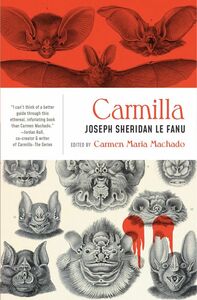
“If you were less pretty I think I should be very much afraid of you”
The story itself is so-so (quite dreary outside the lesbian moments), but it’s still worth reading from a historical standpoint for its influence on later vampire literature.

dark
emotional
medium-paced
I’ve let this thing that happened to me become me. I’m a thing, a commodity, a moral event.
I’d hoped there’d be more vampirism but there’s monsterfuckery at least. Intriguing assembly of fetishism, sadism, and consumption – that is, reality TV.
Of course, this being written in the 1960s, it is coloured by assumptions and biases typical of the age. The sexism becomes apparent when we compare and contrast the experiments conducted on Minner (an adult kidnapped and mutilated, his body altered and optimised, disrupting his self/image and causing him to become monstrous) with those conducted on Lona (a teen coerced into participation, her body left intact (the doctors emphasise her virginity – or maybe they emphasise it to deny violation), disrupting her (presumed natural) status as a mother and causing her to become hysterical). It’s worth noting egg donation and IVF may have been regarded as obscene in the 60s (when they existed solely in the realm of science fiction) but they’re now commonplace and from my perspective reading this book in the 2020s, it doesn’t seem like that big a deal besides the dubious consent. The centuplets are not Lona's children in any meaningful way and they are not siblings to one another in any meaningful way either. It still works for her to be depressed and disturbed and fixated on finding and raising one of those babies (maybe as a way to reclaim some control? or simply to play out a maternal role she feels she ought to?), but to me it just doesn’t read as a logical consequence of the experiment she was a part of.
There’s so much resentment and spite in this novel. Even the ending which has Chalk defeated by the power of love comes about bitterly. Minner and Lona’s relationship is fucked up but that’s kind of the point. It’s meant to be scandalous and doomed to fail. So turning that around through sheer force of will, and in doing so beating the villain at his own game... idk it kind of works, but I still think it’s a little weak. Too neat, maybe.
Not sure what to make of this novel. It’s an interesting one.
challenging
dark
emotional
inspiring
reflective
sad
medium-paced
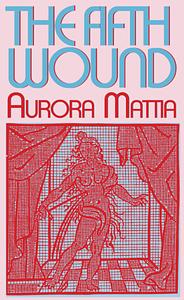
Took me a while to attune but it was worth the effort. Esoteric and erotic, bloody and baroque.
“I saw my exboyfriend for the first time in three years...” is a story already, which is to say, it’s an answered prayer, which is to say, it’s gossip, which is to say: it’s available for the making of meaning, so there was all the more reason to think narratively rather than consequently.
I had assimilated, at that time, into a delusion of liberalism—selfidentification not with my sisters but with the imperial dream of the hero’s journey, with the white woman’s dream of her own exceptionalism, her pretension to the role wounded healer—a hypocrisy of vision, a state of isolation mistaking itself for individuality, for uniqueness, that is, mistaking implosion for the formation of a pearl
Every week I inject estrogen into my ass, because once you said ‘you are pretty, but not beautiful’ and now I am so beautiful that no one understands how ugly I felt when you looked at the moon.
A gaze alone does not constitute a gesture.
dark
medium-paced
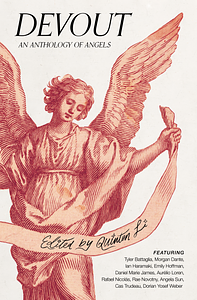
Anyway, be not afraid or whatever. I’m going to kill that fucking demon now.
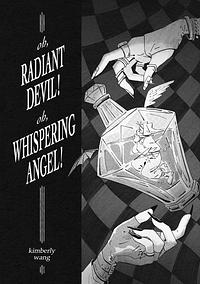
Wide variation in style. My favourites were “And the Mountains Melt Like Wax” by Tyler Battaglia and “Enfleshed” by Cass Trudeau. I would have liked to see more artwork; the collection was skewed too much towards short stories which made the two illustrations included seem out of place. I also felt that not all the stories/poems made the most of the angelic concept? But maybe that’s just my preferences colouring my judgement

inspiring
mysterious
reflective
medium-paced
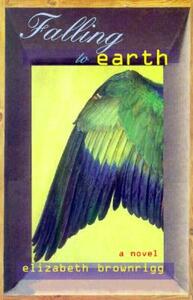
This is a story about doppelgängers and angels and the difference between heaven and hell.
An intriguing mission statement but I don’t know if it’s accurate. To me this book had less to say about the difference between heaven and hell and more to do with autonomy, expression, embodiment, embracing/rejecting difference altogether... Maybe it’s about hell in the “hell is other people” way.
In any case it’s compelling though it does unravel towards the end. I’d love to discuss and dissect this book but it’s out of print and hard to come by so, unless I pass my copy around to be read by each person in turn, it wouldn’t be a great book club pick unfortunately. Still, I’ll be mulling it over in my own mind for a little while.
It’s a gem, with imperfections. Underrated.